Mame Shiba parents and bloodlines: the size standard, pedigree papers, and how we choose our breeding dogs
Published · Last updated
Look up the Mame Shiba in English and you will often read, "No one knows who makes them small, or by what standard." People cannot see the parents, do not know the size rules, and cannot tell what the pedigree papers say. That is a fair concern. Most families overseas cannot come all the way to Japan to meet a puppy's parents. On this page, we show you the real thing: what kind of dogs our puppies' parents are, the standards we use to choose them, and what is written on the pedigree certificate your puppy comes with.
At a glance
- What it is
- The small size of the Shiba Inu. Small Shiba have long existed in Japan, once called "Koshiba" or "Shakushiba." No other breed has been mixed in.
- Height standard
- Males up to 34 cm (13.4 in), females up to 32 cm (12.6 in) at the shoulder, measured by the association after 12 months of age
- Pedigree registry
- Japan Mame Shiba Association (founded 2018). The first to recognize the Mame Shiba as a breed was KC Japan (2008)
- When the breed is written as "Mame Shiba"
- Only when all 14 ancestors over three generations (parents, grandparents, great-grandparents) are certified dogs that passed the height check
- Breeding dogs
- Only dogs over one year old that passed the height check, are clear on the GM1 DNA test, see a veterinarian every year, and have a calm temperament
- Champions
- Kokumaru: the first dog registered as a Mame Shiba and the first Mame Shiba champion. Genta and his daughter Satsuki: father and daughter KC Japan Champions (2015)
Where does the Mame Shiba come from?
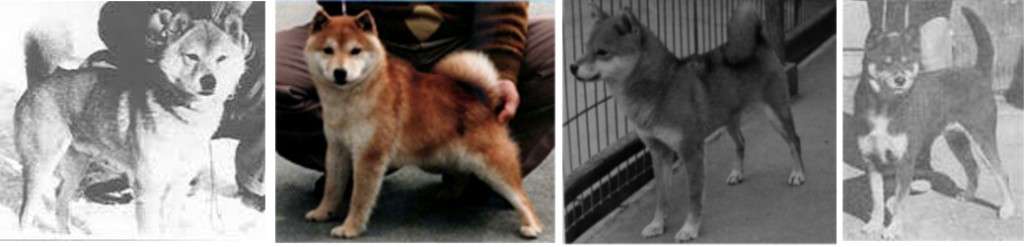
The Mame Shiba is not a dog created by mixing in another breed. It is a Shiba Inu: the small Shiba that has lived in Japan for a long time, kept going over many generations. In the mountain villages of old Japan, farming families could not afford to feed a large dog. But they still needed to keep wild animals away from their fields. So they kept small Shiba that ate little and kept wild animals away just by being there. These dogs are said to have been called "Koshiba" (little Shiba) or "Shakushiba" (one-foot Shiba). One shaku is about 30 cm (about 12 in). KC Japan's introduction to the Mame Shiba also says that, before the war, especially small Shiba were kept by families in the mountains who farmed and hunted.
We still have an old advertisement that presents such dogs as "the smallest type of Shiba Inu." It describes them as dogs for hunting badgers, weasels, raccoon dogs and foxes by going into their burrows, weighing no more than about 5.6 kg (12.4 lb) as adults, and standing about 24 to 30 cm (9.4 to 11.8 in) tall.

Before I even started elementary school, my late father, Masanobu Nishiyama, took me along to remote mountain villages around Nagano and Yamanashi, searching for small Shiba. He was looking for dogs good enough in looks and build to enter a dog show, but which had never won a prize just because they were small. His condition was that the line be small all the way back: parents, grandparents and great-grandparents. If the parents are large, large puppies appear a few generations later. Again and again he bowed his head to strangers. Some days we were turned away at the gate; other days we were served tea and allowed to take a dog home. The ancestors of our dogs include dogs that came to us in this way from all over Japan.

When the Shiba Inu standard was set, the size was brought into a single range. The Nihon Ken Hozonkai (NIPPO) standard height for the Shiba Inu is 39.5 cm (15.6 in) for males and 36.5 cm (14.4 in) for females. The Shiba Inu is still with us today thanks to the work of those people. But within that standard, the small Shiba were losing their place. What we have done is keep that small Shiba, which had always been there, and add one more category within the Shiba Inu, the small size, and have it recognized (KC Japan, 2008). We have never mixed in any other breed. Even today, we breed only Mame Shiba born to Mame Shiba parents with each other. If we bred them with ordinary Shiba Inu, size would become unpredictable from the next generation on, and that leads to the sad result of "we brought home a Mame Shiba, and it grew to the size of a Shiba Inu."
Chapter 02How big is a Mame Shiba? The size standard
A Mame Shiba's size is defined by height, not weight. The standard is up to 34 cm (13.4 in) for males and up to 32 cm (12.6 in) for females. Height means the distance from the ground to the highest point of the shoulder. The two organizations that issue Mame Shiba pedigrees today, KC Japan and the Japan Mame Shiba Association, both use these figures as the upper limit. Height is measured by the association after 12 months of age, when the body has finished growing. Compared with the Shiba Inu standard, even the upper limit for a Mame Shiba is 5.5 cm (2.2 in) lower for males and 4.5 cm (1.8 in) lower for females. Adult dogs at our kennel weigh about 4 to 6 kg (about 9 to 13 lb).

| Mame Shiba | males up to 34 cm (13.4 in), females up to 32 cm (12.6 in) | KC Japan and Japan Mame Shiba Association |
| Shiba Inu | males 39.5 cm (15.6 in), females 36.5 cm (14.4 in) | NIPPO |
| Akita | males 67 cm (26.4 in), females 61 cm (24.0 in) | NIPPO |
Still, a puppy's adult size is only a prediction at the time you bring it home. We can tell you that puppies rarely grow much larger than their parents, but we will not promise it. That is exactly why we want you to look at the parents' height. And we do not believe that the smaller a dog is, the better.
Chapter 03What is written on a Mame Shiba pedigree certificate?
Our puppies come with a pedigree certificate from the Japan Mame Shiba Association. It lists the names of 14 ancestors over three generations (parents, grandparents and great-grandparents), with the height of each one. The breed is written as "Mame Shiba" only when all 14 of these dogs are certified dogs that passed the height check after 12 months of age. If even one is missing, the breed is written as "Jun-Mame Shiba" (provisional Mame Shiba). If the parents are not certified dogs, no pedigree certificate is issued for the puppy at all.
A puppy's pedigree certificate is also marked "not yet certified." This means the puppy itself has not yet had its height checked. Only after it turns one year old and passes the check, and only if every ancestor from No. 1 to No. 14 on the certificate is a certified dog with its height recorded, does the breed line change to "Mame Shiba (certified)," with the measured height written in the color field. A dog that passes the check also receives a Mame Shiba certification from the association. The certification shows the date of the check and the height actually measured.

Below is the pedigree certificate of Shiho, a female from our kennel born in 2023. Shiho is 29.0 cm (11.4 in) tall. Her father is 31.0 cm (12.2 in) and her mother 28.0 cm (11.0 in). The heights of her 14 ancestors all fall between 28 and 33 cm (11.0 and 13.0 in). One of her great-grandfathers, Kokumaru, has a champion mark in front of his name. Whether microchip numbers appear on a pedigree certificate depends on whether the breeder applies for it with the association. Shiho's certificate also lists her parents' microchip numbers and their GM1 DNA test numbers.

There is a reason two organizations issue Mame Shiba pedigrees. On November 1, 2008, KC Japan (The Kennel Club of Japan) recognized the Mame Shiba as a breed and began issuing pedigree certificates with "Mame Shiba" in the breed line. KC Japan's English introduction to the Mame Shiba names my late father, Masanobu Nishiyama, as the person who carried on the breeding of the Mame Shiba. After that, the Mame Shiba became popular, and the number of people looking for one rose sharply. Many of the new breeders who joined at that time were ordinary Shiba Inu breeders. As a result, the old problem returned: puppies born from dogs with a lot of standard Shiba blood grew large. So on January 1, 2018, breeders who had long raised only Mame Shiba came together and founded the Japan Mame Shiba Association, with stricter conditions on the generations.
KC Japan's English page also advises people bringing a Mame Shiba home from overseas to check that the breed line on the pedigree certificate says "Mame Shiba." Whichever kennel you choose, first check which organization issues the pedigree, and what the breed line says.
Chapter 04How do we choose the parent dogs?
We use as parents only dogs that we have checked on all three points: size, health and temperament. For size, the dog must be over one year old with its body fully grown, and must have passed the association's height check. On top of that, we look at its build, its bite and its face. For males, we also check that both testicles have properly descended.
For health, every dog is DNA-tested for GM1 gangliosidosis, an inherited disease found in the Shiba Inu, and only dogs that are clear become parents. Every year, our regular veterinarian, Fujimori Veterinary Clinic, examines their knees and eyes. Every dog is also microchipped.

We also choose by temperament. Some Japanese dogs of the past had fierce tempers. Just as breeders in Europe and America have done, we have chosen calm dogs that trust people to be our parent dogs. What shapes a puppy's temperament is the relationship between its mother and people. Even in the middle of giving birth, when I look in, the mother comes over as if to say, "Pet my head." When I walk through the room where she is nursing, she comes up to me with a puppy still hanging on. Puppies that grow up watching a mother who trusts people come to trust people too. After many generations, our puppies, even the males, wag their tails at people they are meeting for the first time.
All mating is managed by people. Each group is made up of one male and several females, so there is never any doubt about whose puppy is whose. When we breed with a dog from another kennel, our conditions are that it has passed the height check, has been DNA-tested, and is up to date on vaccines and preventive care.
Chapter 05Our parent dogs and champions
A dog cannot become a champion just by being small. Judges look at each dog one by one and decide whether its appearance, build and movement are true to the Shiba standard. Kokumaru was the first dog registered by KC Japan under the breed "Mame Shiba" (registration number JSM-00001/09), and he was also the first Mame Shiba to become a champion. On the wall of our kennel office hang KC Japan champion certificates, starting with Kokumaru's.

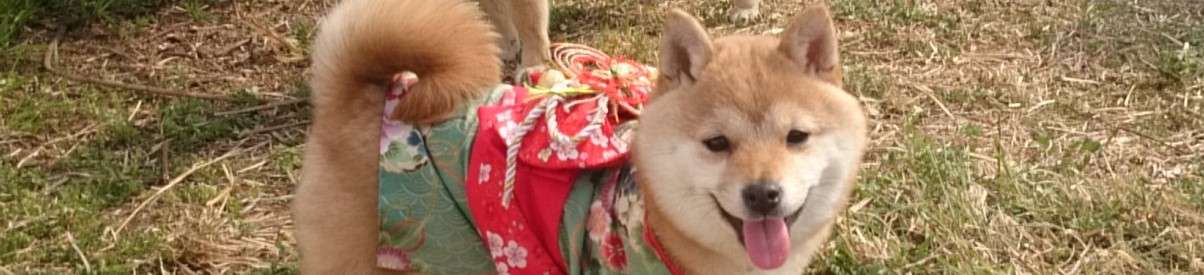
Some of our dogs have become champions across two generations. Genta (registered name Komidori Gentamaru of Sesshu Hozanso, male, born October 20, 2010) became KC Japan Champion No. 1323, and his daughter Satsuki (registered name Kosatsukihime of Sesshu Hozanso, female, born June 17, 2013) became No. 1324. Father and daughter appeared side by side in the notice of new champions in the summer 2015 issue of KC Japan's magazine, Partner Dog. On April 19 of the same year, at a KC Japan show for Mame Shiba only, Genta won BOS (Best of Opposite Sex: the best dog of the opposite sex to the Best of Breed winner). Satsuki is also the Mame Shiba in the size comparison above.


How can you check the parents from overseas?
There are three things we would like you to check: the parents' height; the organization that issues the pedigree and what its breed line says; and the parents' microchip numbers on the pedigree certificate. You can use these checks with any kennel. If you wish, we can show you around our kennel by video call. The time difference with Japan often makes this hard to schedule, so please talk to us first. If the parents' numbers appear on the pedigree certificate, you can check, with the certificate you receive, that your puppy really was born to those parents. When you sign the contract, we give you your puppy's microchip number and also show you a video of the number being read with a scanner.
A pedigree certificate can tell you where a dog came from, even decades later. Some families have found their way to our kennel by tracing the pedigree of a dog they had brought home from a pet shop.
Frequently asked questions
Is the Mame Shiba a real breed?
It is the small size of the Shiba Inu. KC Japan recognized it as a breed in 2008, and today the Japan Mame Shiba Association also issues pedigrees for it. The FCI, the international federation, and the Nihon Ken Hozonkai do not recognize it as a separate breed.
How big is a Mame Shiba?
Up to 34 cm (13.4 in) at the shoulder for males and up to 32 cm (12.6 in) for females. The height is measured by the association after 12 months of age.
Is any other breed mixed in?
No. The Mame Shiba is a Shiba Inu, and we breed Mame Shiba only with Mame Shiba.
What does the pedigree certificate show?
The names and heights of 14 ancestors over three generations. If the breeder applies, it also shows the parents' microchip numbers.
Can I see the parent dogs from overseas?
If you wish, we can show you around our kennel by video call. Because of the time difference, please talk to us first.
If you have any questions about our parent dogs, bloodlines or pedigree certificates, please ask us anything. I, Nishiyama, handle every inquiry and puppy introduction myself.

Tomoyuki Nishiyama, second-generation owner of Sesshu Hozanso, a kennel dedicated to Mame Shiba. I have lived with dogs for more than 50 years and am the author of INUDŌ: The Shiba Inu Code. Everything on this site comes from my own experience.
- KC Japan (The Kennel Club of Japan): Mameshiba
- KC Japan: Mameshiba registration guide (Japanese)
- Japan Mame Shiba Association: registration rules (Japanese)
- Nihon Ken Hozonkai (NIPPO): Japanese dog standard
同じカテゴリーのページ
SAME CATEGORY